
By Allie Henninger
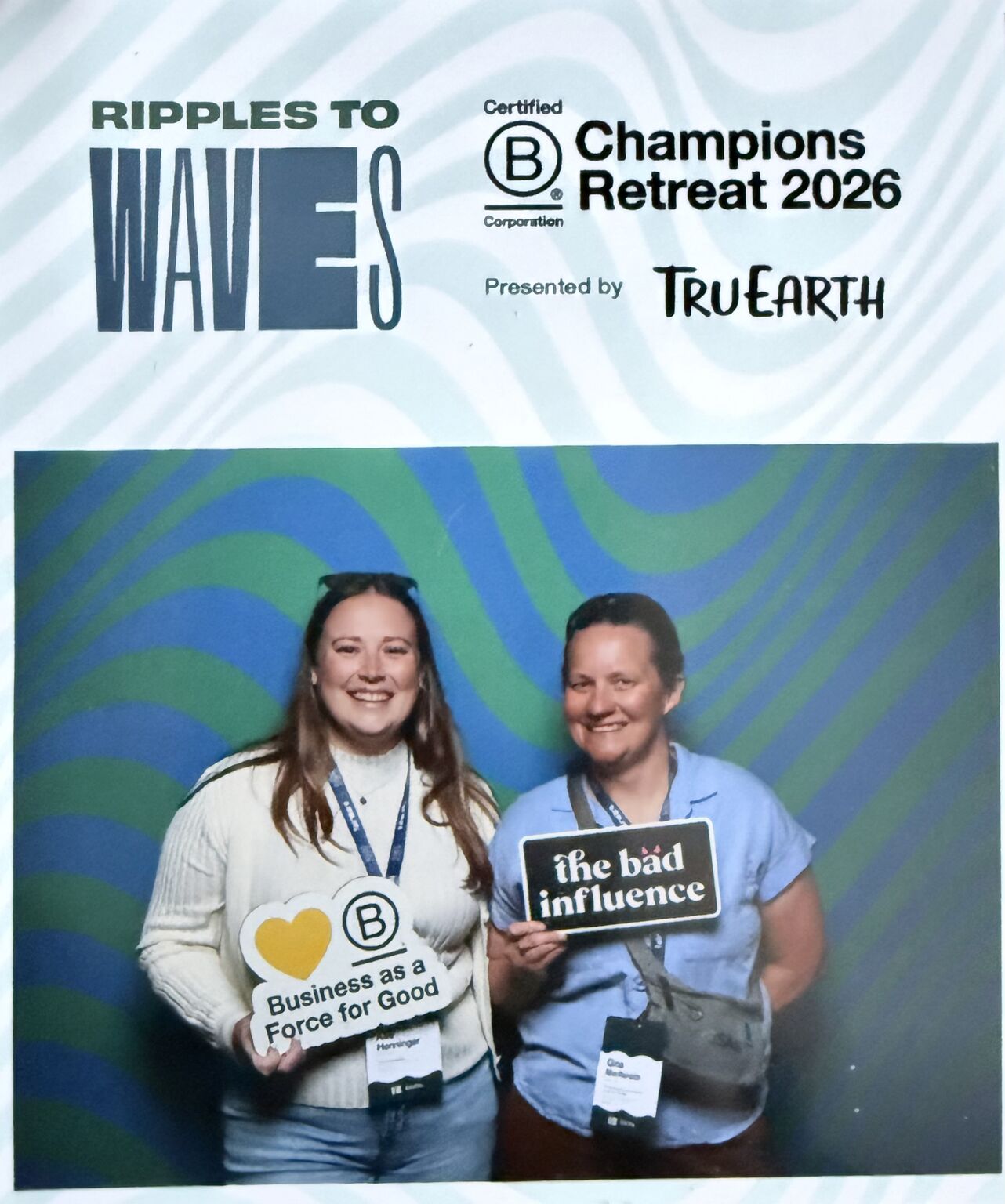
Last month, I attended the B Corp Champions Retreat, where business leaders, practitioners, and advocates came together to discuss the evolving role of companies in driving meaningful impact. The conference was energizing, and the community built through partnerships and conversations with other B Corps felt especially encouraging in our current climate.
Operating a responsible business takes an intentional strategy built around strong governance, and achieving B Corp certification is not just about meeting the updated standards, but also about defining what success in business can and should look like, and ensuring all stakeholders are involved in the process.
Yes, B Corp certification can be used as a lever for resilience, differentiation, and long-term value creation, but the movement that B Lab has built, that business should be a force for good, is bigger than the impact any single company can drive on its own.
Here are three takeaways that I found myself reflecting on my way home from Milwaukee:
Demystifying the standards
With the updated B Corp V2 standards, there is much more rigor and evidence required to prove a B Corp is truly practicing what they preach. Many companies understand what the standards are asking for, but may struggle with how to operationalize them. Questions around governance, documentation, stakeholder engagement, and internal accountability continue to surface. This is where the real work lies—translating ambition into systems, processes, and day-to-day decisions.
The bar for proving your company operates in a responsible way is getting higher, and companies may need more support to keep up. The evolution of the standards is intentional to align with best practices and drive real change, not just achieve certification.
Many leaders striving to maintain their B Corp certification for their company are not sustainability professionals, so the complexity of the revised standards can be a hurdle for small organizations with resource constraints. Education and community are key to providing support, sharing best practices, and helping avoid disengagement when the process feels overwhelming.
The goal of making the requirements more rigorous was not to weed out companies who can’t get it done, but to ensure those who can are embedding sustainability into their structures, so that when it comes time for recertification, their progress and impact are clear.
Check out our previous post on the updated B Corp V2 standards.
3R can help navigate the complexity of the updated standards by translating them into practical steps, aligning with how a company already operates and supporting implementation and integration of the requirements into the fabric of the company.
Get Support Prepping for the New B Corp Standards
3R’s experts will help you understand what these new standards mean for your business.
Aligning profit with impact
What if avoiding harm was built into how your company makes money? There is a broader movement toward aligning profit with positive impact—through better product design, more responsible supply chains, and business models that create value without externalizing costs. Operating a business should not be at the expense of people or the environment.
We should be doing more to embed positive impact into core business practices and ensure companies are accountable to all stakeholders. If the B Corp movement can accelerate the shift in how businesses operate globally, we can help redefine success beyond profit alone.
The standards ensure that stakeholder consideration is embedded into the governance structure of the company, ensuring the highest governance body has oversight of all objectives and the decision-making process, helping align long-term stakeholder value with business strategy.
Additionally, companies must set some specific targets and, in future re-certification years, report on progress against them. In the Climate Action requirement, for example, this incentivizes efficiency, innovation, and long-term cost savings, without externalizing the company’s impact. In the Fair Work requirement, this ensures employee engagement and aligns profitability with employee well-being and productivity – value should be shared, not extracted.
Supply chains are also a critical area of focus. For many organizations, most of the impact sits upstream, and shifting incentives across the value chain will be essential to driving meaningful change. Risks can often be hidden in the value chain when responsibility is not managed outside of direct operations. Engaging the supply chain helps ensure the positive impact of improved social and environmental practices is spread across those that share responsibility in the company’s overall success.
Importance of the business value of sustainability
Another key takeaway is the importance of connecting sustainability efforts back to business value. While the benefits are real—reduced risk, stronger employee retention, cost savings, and improved brand reputation—they’re not always easy to quantify. There is an opportunity to better link impact KPIs to business KPIs, so sustainability becomes part of how success is measured, not separate from it.
One session I attended focused on how we can turn the new standards into action. Breaking down the requirements into phased steps for improvement and integration can help identify specific topics to measure impact. Some companies have embedded B Corp into the core of their mission and the value is clear, but sometimes, those leading the submission may need more tangible metrics to show the value of the certification to leadership. If we can tie the requirements back to operational ROI, we can improve decision-making and ensure the value of the sustainability efforts is aligned with business success.
My conclusion: Integration is key
Ultimately, success comes down to integration. The organizations making the most progress are embedding sustainability into the fabric of their companies—aligning leadership, engaging all stakeholders, and building the governance structures to sustain momentum over time.
For many of the companies in the room, the intention is there. What’s needed now is clarity, structure, and a practical path forward to ensure the updated standards bring the value the B Corp community wants to share with the world.
The B Corp community is strong and passionate. The organizations are dedicated to making a positive impact in the work they do, and it was so wonderful to meet these incredible leaders in person and see their enthusiasm first-hand. In a world that often feels full of negative climate news, these companies are determined to continue strengthening their businesses and support people and the planet in the process.
Connect with 3R
At 3R Sustainability, we are uniquely positioned to support companies in navigating this complexity. As a full-service sustainability consulting firm, we can support organizations holistically or focus on specific pieces—ensuring that individual efforts align with the broader standards and are not performed in isolation.
Whether it’s conducting gap assessments, building actionable roadmaps, or helping translate standards into business strategy, the goal is the same: move from overwhelm to action, and from ambition to competitive advantage. The future of sustainability belongs to companies that can operationalize the good work they are doing every day.
If you’d like to explore how your organization can move from standards to action, we’d love to connect.