


Environmental disclosure is evolving rapidly. What was once viewed primarily as a voluntary sustainability exercise is rapidly becoming part of how organizations manage risk, demonstrate accountability, and communicate long-term business resilience.
As reporting expectations continue to mature, many organizations are reassessing how they approach CDP disclosure. Now many companies are recognizing that disclosure can provide value beyond annual reporting obligations and scoring outcomes.
Organizations that approach disclosure strategically are often better positioned to identify risks and opportunities, improve internal coordination, strengthen governance, and support more informed decision-making across the business.
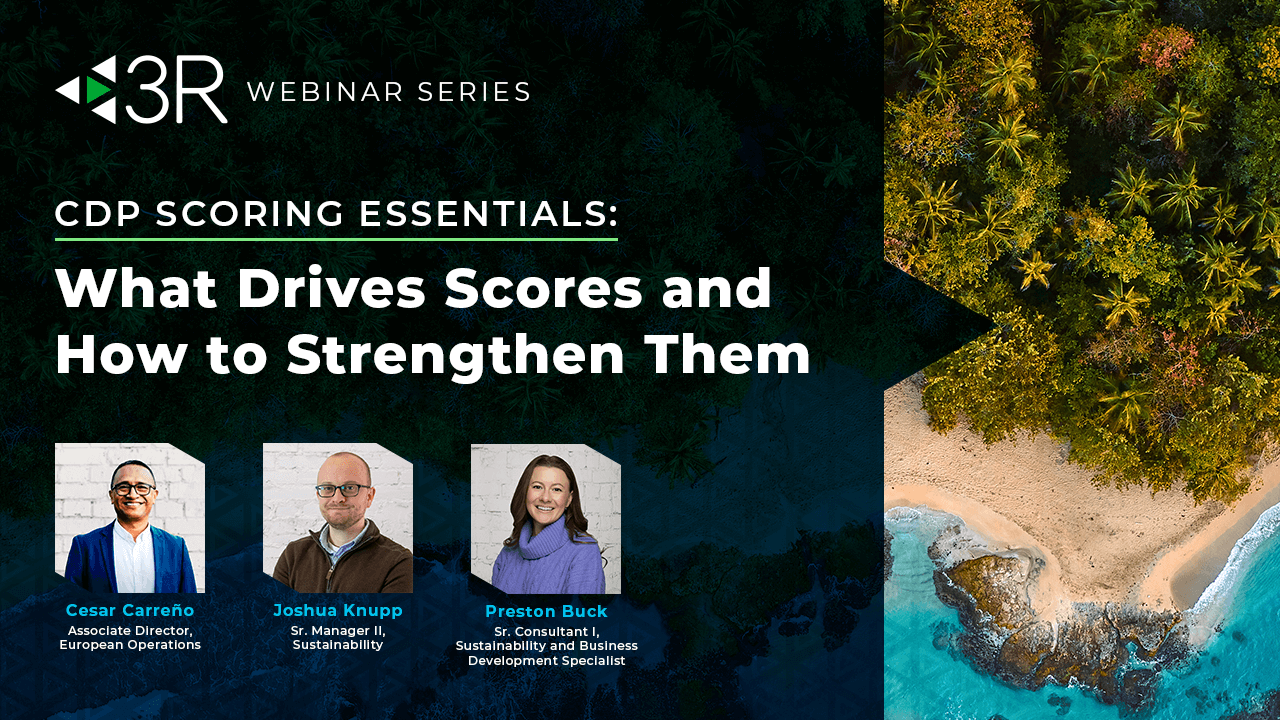
Watch the webinar on CDP 2026 Updates
3R assesses the key updates in the CDP 2026 questionnaire compared to 2025 and highlights structural changes, shifts in emphasis, and areas where reporting has become more streamlined or complex.
Why disclosure expectations are evolving
Investors, customers, regulators, and supply chain partners are requesting more detailed and decision-useful environmental information. Organizations are now expected to communicate not only environmental impacts, but also how environmental risks are governed, managed, and integrated into a broader business strategy.
At the same time, companies are navigating a growing number of sustainability-related frameworks and reporting expectations. CDP’s continued alignment with frameworks such as the International Sustainability Standards Board (ISSB) and the Taskforce on Nature-related Financial Disclosures (TNFD) reflects the overarching shift toward more integrated environmental disclosure.
As a result, organizations are facing greater expectations around transparency, governance, documentation, and data quality.
Disclosure is becoming a business and risk management tool
Many organizations now use the CDP process to better understand operational risks, governance gaps, and areas requiring additional internal coordination.
At its best, the disclosure process can help organizations better understand:
- Climate-related risks and opportunities
- Supply chain vulnerabilities
- Governance and accountability structures
- Data limitations and operational blind spots
- Progress toward climate and sustainability goals
This broader focus is one reason why CDP has evolved beyond emissions reporting alone. Currently, organizations are often expected to demonstrate how they are approaching governance, resilience, climate transition planning, and long-term strategy.
Supply chain expectations continue growing
Many large organizations now request environmental disclosure data from suppliers as part of all-encompassing sustainability and risk management efforts.
Companies across industries are beginning to evaluate suppliers based on cost, operational performance, as well as emissions management, environmental governance, climate commitments, and reporting transparency.
For many organizations, CDP disclosure is becoming an important mechanism for demonstrating accountability and supporting customer confidence.
Get CDP Support
3R is a CDP Accredited Solutions Provider and works with clients to strengthen disclosure quality, improve reporting readiness, and help translate disclosure into strategic business value.
Governance and documentation matter more than ever
Strong CDP submissions depend on more than data collection alone. Organizations are frequently expected to demonstrate how reported information was developed, reviewed, validated, and governed internally.
Common reporting challenges often include:
- Inconsistent or incomplete data
- Limited documentation and traceability
- Gaps in governance and accountability
- Misalignment across teams
- Limited internal review and validation processes
As disclosure expectations continue evolving, mature governance structures and clearly documented methodologies can help improve reporting consistency and strengthen disclosure quality.
Organizations that prepare early and establish clear reporting processes are often better positioned to improve reporting readiness and reduce disclosure risks during the submission cycle.
The role of consulting and assurance
As environmental reporting becomes more rigorous, many organizations are seeking additional support to strengthen disclosure quality and improve reporting defensibility.
Consulting support can help organizations:
- Develop greenhouse gas (GHG) inventories
- Improve reporting processes and governance structures
- Prepare CDP questionnaire responses
- Identify disclosure gaps and scoring improvement opportunities
- Align reporting with broader sustainability strategies
At the same time, assurance and verification services are becoming more important as organizations face greater expectations around transparency and data credibility. Verification and assurance activities can help strengthen confidence in reported information and support more reliable sustainability disclosures.
How 3R can help
3R works at the intersection of ESG, climate, building performance, and reporting, helping clients realize the value of sustainability across their organizations and assets through goal setting, action planning, and accurate reporting.
Our consulting and assurance divisions are both recognized as CDP Accredited Solutions Providers.
3R supports organizations with:
- Greenhouse gas (GHG) inventory creation and review
- CDP preparation and questionnaire submission
- Sustainability reporting strategy and support
- GHG inventory verification
- Sustainability assurance services
By combining strategic consulting support with assurance capabilities, 3R helps organizations strengthen disclosure quality, improve reporting readiness, and support more defensible sustainability reporting outcomes.
Contact our team today to discuss your CDP disclosure goals.